
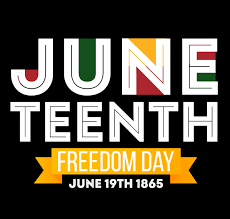
The NRC will be closed this Friday in honor of Juneteenth. Both the 6:30pm S.A.A. Meeting & 8pm Debtors Anonymous Meeting will still take place.
Juneteenth: In 1863, during the American Civil War, Pres. Abraham Lincoln issued the Emancipation Proclamation, which declared more than three million enslaved people living in the Confederate states to be free. (Chattel slavery remained legal in border states loyal to the Union—such as Delaware, Maryland, Kentucky, Missouri, and West Virginia—and was not officially abolished in the United States until the passage of the Thirteenth Amendment.) More than two years passed, however, before enslaved African Americans living in Texas (some 250,000) were freed. It was not until Union soldiers arrived in Galveston, Texas, on June 19, 1865, and were able to enforce the edict that the state’s residents finally experienced freedom. For some—enslavers and the enslaved alike—it was through Maj. Gen. Gordon Granger’s General Order No. 3 that they first learned that slavery had been abolished in the Confederate states.
The order read, in part: “The people of Texas are informed that in accordance with a Proclamation from the Executive of the United States, ‘all slaves are free’.”
Reactions to freedom from the formerly enslaved ranged from silent disbelief and shock to celebrations filled with prayer, feasting, song, and dance. Those celebrations formed the basis of an annual holiday that would come to have many names, including Emancipation Day, Jubilee Day, and Juneteenth.